
Los Cabos Home Design · Journal
The Journal
Building a Custom Home in Los Cabos: Process, Team and Timeline
From the lot to the keys: how a custom home in Los Cabos is planned, who belongs on the team, and how the stages of design and construction usually unfold.
Building from the ground up in Los Cabos is one of the most rewarding ways to own here: the house is shaped around the light, the views and the way you actually live. It is also a long, layered project, and the owners who enjoy it most are the ones who understand the sequence before the first drawing is made.
This guide walks through the process as it usually unfolds, from choosing land to moving in, with notes on who to involve at each stage and the questions worth asking along the way.
Start with the land, not the floor plan
Every good Cabo house begins with its site. A hillside lot in Pedregal or along the Tourist Corridor offers sweeping views but brings retaining walls, access challenges and careful drainage. A flatter lot in a San José del Cabo community or around Puerto Los Cabos is simpler to build on and often closer to services. On the East Cape and around Todos Santos, larger parcels bring privacy along with practical questions about water, power and road access.
Before committing to a lot, it is worth walking it at different times of day with an architect. Orientation to the sun, the direction of prevailing winds, the slope, neighbouring sight lines and the community’s architectural guidelines all shape what can be built. Many gated communities have their own design review committee and construction rules, and these sit on top of municipal requirements.
For buyers who are not Mexican citizens, coastal land in the restricted zone is typically held through a bank trust known as a fideicomiso, or through a Mexican company. A notary public handles the formal purchase, and an independent attorney is a sensible addition for title review. If you are still weighing whether to buy land, a finished home or something in between, our overview on owning a home in Los Cabos sets out the broader picture, from neighbourhoods to the way ownership is structured.
Assemble the team early
A custom home is built by a team, and the relationships between its members matter as much as any single choice. The core roles are:
- Architect. Leads the design, prepares drawings and, in Mexico, a licensed architect signs the plans submitted for approval. Browse the architects and design studios working across the region.
- Builder or general contractor. Prices and executes the work, manages trades and keeps the site moving. Our section on custom home builders and contractors lists firms in Cabo San Lucas and San José del Cabo.
- Structural engineer. Designs foundations and structure for local soil, seismic and wind conditions; usually brought in by the architect.
- Interior designer. Ideally involved during design development so lighting, millwork and furniture layouts are planned together. See the interior designers section.
- Owner’s representative. Optional, but valuable for owners who live abroad and cannot visit the site regularly.
Some firms offer design and build under one roof. Architects by the Sea and CRIBCA Arquitectura y Construcción, for example, describe themselves as handling both design and construction. Others prefer a separate architect who also supervises the builder, as Moreno Arquitectos notes in its services. Neither model is inherently better; the right one depends on how much oversight you want and how involved you plan to be.
The stages of a custom build
1. Brief and concept
You describe how you want to live: number of bedrooms, how often family visits, whether you entertain, how much of the year you will be in residence and whether the home will be rented. The architect responds with site studies and concept sketches. This is the cheapest moment to change your mind, so take your time.
2. Design development and drawings
The concept is refined into floor plans, elevations and sections, then into a full set of construction drawings with structural, electrical, plumbing and mechanical plans. Lighting, shading, air conditioning, water storage and pool equipment should all be resolved here rather than improvised on site.
3. Approvals
Drawings go to the community’s architectural committee, where one exists, and to the municipality for a construction licence. Timing varies by community and by the completeness of the submission, so build a buffer into your expectations.
4. Pricing and contract
With approved drawings, builders can price accurately. Ask how the contract is structured, how changes are priced and approved, how payments are tied to progress and what is excluded. Clear allowances for finishes avoid surprises later.
5. Construction
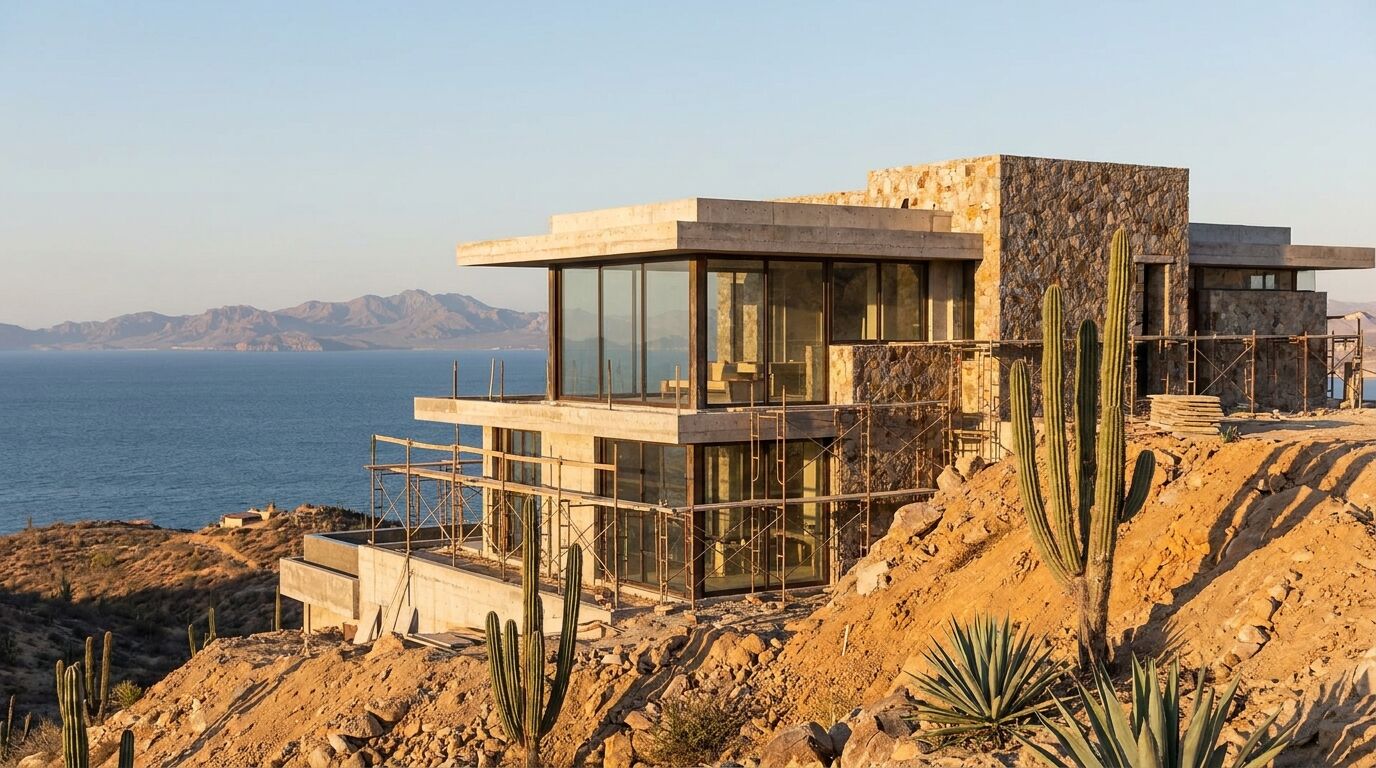
Site work, foundations and structure come first, followed by the enclosure, systems, finishes and landscaping. Concrete and block are the local norm, prized for their mass and resilience. Regular photo and video updates, a shared schedule and periodic site visits keep owners abroad informed.
6. Finishes, furnishing and handover
The final stretch is detail-heavy: stone, tile, millwork, fixtures, shades and furniture. A thorough punch list and a walk-through of every system before handover are essential, along with manuals and warranty information.
How long it takes
There is no single timeline, but owners should think in seasons rather than months. Design and approvals commonly take the better part of a year for a substantial home, and construction often longer, depending on size, site complexity and the availability of materials and trades. Imported finishes and specialist systems can extend lead times, so ordering early is wise.
The calendar also matters. Hurricane season runs roughly from June to November, and the late-summer months bring heat and the possibility of heavy rain. Builders plan concrete pours, roofing and exterior work with this in mind, and a good contractor will have a site-protection plan for storms.
| Stage | Who leads | What to settle |
|---|---|---|
| Site and brief | Owner and architect | Orientation, views, community rules, priorities |
| Design and drawings | Architect and engineers | Layouts, structure, systems, lighting, shading |
| Approvals | Architect | Committee review, municipal licence |
| Construction | Builder | Schedule, change process, reporting |
| Finishes and handover | Builder, designer, owner | Selections, punch list, manuals, warranties |
Questions worth asking any builder
- Which completed homes can I visit, and may I speak with those owners?
- Who will be on site day to day, and how often will I receive updates?
- How are changes requested, priced and approved in writing?
- Which trades are in-house and which are subcontracted?
- How is the site protected during storms and when work pauses?
- What warranties apply, and who handles issues after handover?
Builders with their own workshops can simplify coordination. Custom Homes Mexico, for instance, mentions an in-house carpentry and metalwork shop, which can help keep cabinetry and ironwork aligned with the build schedule.
Thinking about life after the build
A new home in Los Cabos is often lived in part-time. Plan from the outset for how it will be cared for when you are away: maintenance access to pool and air conditioning equipment, storage for linens and outdoor cushions, and space for a caretaker or a property management company. Owners who intend to rent their home, or who would like help with housekeeping and arrivals, may find the villa services listed on Los Cabos Villa Concierge useful to consider while the floor plan is still flexible.
Planning tips
- Walk the lot with your architect before you buy, ideally at sunrise and late afternoon.
- Read the community’s architectural guidelines early; they shape height, setbacks and materials.
- Bring the interior designer in during design development, not after construction begins.
- Resolve water storage, air conditioning and pool equipment locations on the drawings.
- Agree a written change-order process before construction starts.
- Allow for the summer and storm season in the construction schedule.
A custom home here asks for patience, good partners and a clear brief. Take the time to choose a team you trust, settle decisions on paper rather than on site, and the result can be a house that feels entirely of its place, open to the light and built to weather the Baja seasons for many years.
This guide is for general information. Details change, so please confirm specifics directly with each business. More from the Journal →